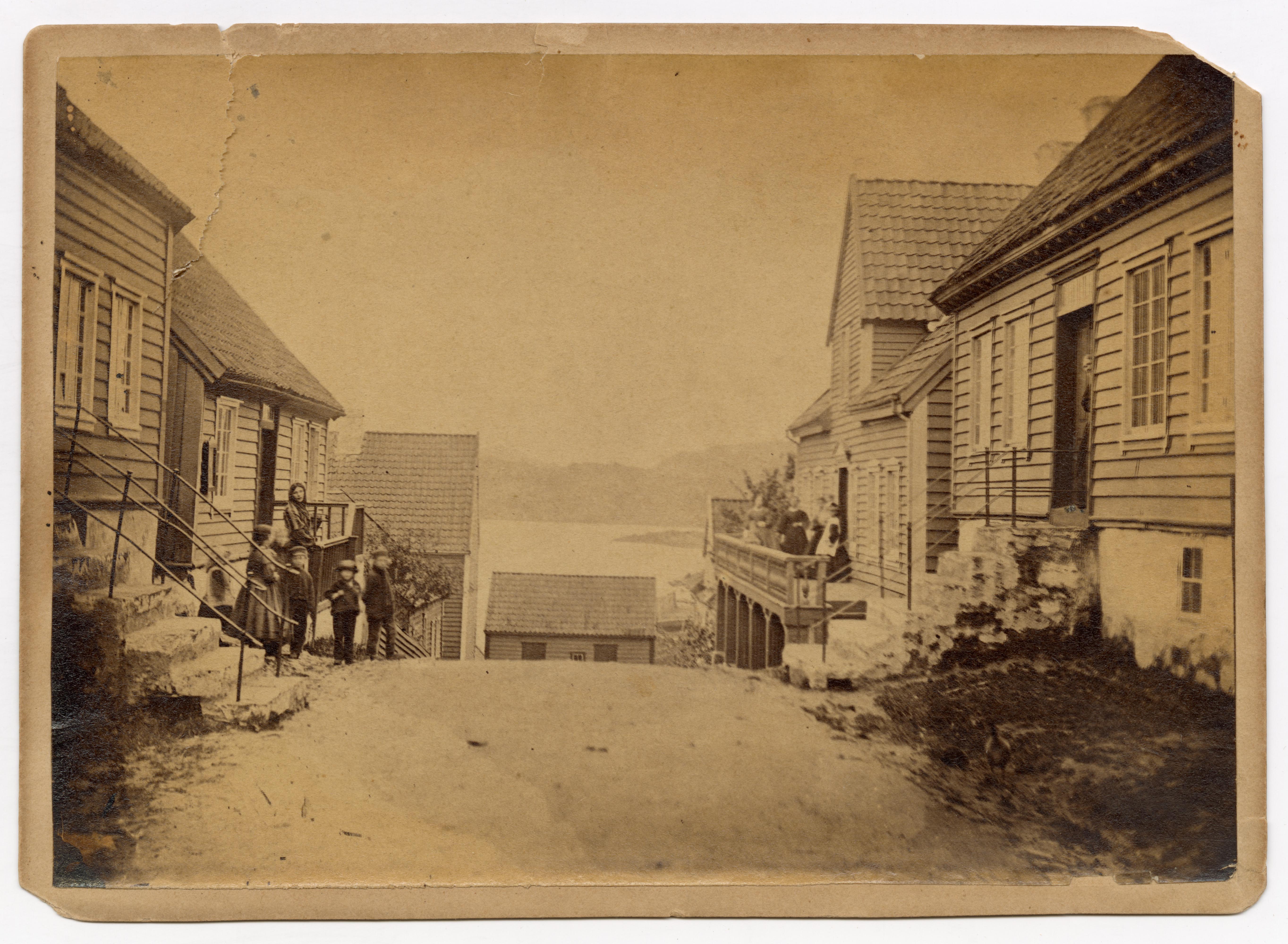
Reymert house in Farsund, Norway, circa 1850
1 media/p0391_00714_thumb.jpg 2024-04-01T20:57:51+00:00 Kristina Warner c8c3eeb8fc534b4204fc4ece92574ef9ee4ab6bd 6 2 August Reymert Papers (P0391) plain 2024-10-04T21:01:03+00:00 Kristina Warner c8c3eeb8fc534b4204fc4ece92574ef9ee4ab6bdThis page is referenced by:
-
1
media/p0391_00714.jpg
2024-03-26T16:11:46+00:00
Overview of Migration
36
plain
2024-10-18T21:27:42+00:00
Push and Pull Factors
Early migration started in 1825 with the sailing of the sloop “Restauration.” Between 1830 and 1920, 800,000 Norwegians left their homeland in hopes of starting anew in North America. Norway lost a higher proportion of its people to the United States than any other country after Ireland.
The land in Norway was one factor in emigration. Only 3-4% of the land was tillable– meaning that farming was difficult. Economic changes and a doubling population between 1815 and 1865 added pressure alongside the very mountainous and forested land. Around the middle of the 1860s, larger numbers of Norwegians left because of overpopulation, shortages, poor crops, and a changing market structure that led to many farms being foreclosed upon.
The beginning of the emigration caused controversy in Norway, with some for and some against the ideas of immigration and the United States. Newspapers often were filled with warnings on the perils of emigration, that were enforced by gloomy immigrant letters. Henrik Wergeland, a celebrated Norwegian playwright, called emigration a frenzy and said “it was the most dangerous disease of our time, a bleeding of the Fatherland, a true frenzy, because those whom it seizes follow neither their own nor others’ reasons, disdain arguments and examples, give up the present for a still more threatening, dark future, and let themselves be driven by into the vortex of that future’s own sufferings.” (Blegen, Norwegian Migration to America, 1825-1860).Johan Reiersen -- Defender of Immigration
Johan R. Reiersen, a defender of immigration, presented his views in Christianssandsposten toward the basic causes of emigration. In 1843, Reiersen went to America to explore his theories. When he came back after visiting with many emigrants in the West, he proposed his influences for migration:- The gloomy prospects in Norway for the future of the rising generation, coupled with the hope of independence and happiness in America;
- The fact that for the “producing working class,” Norway is too circumscribed; that there is not room enough; and that the time is not distant when “a slavish dependence” will become general;
- General dissatisfaction with the administration of Norwegian law, especially with reference to relations between debtors and creditors, where the regulations in force work the ruin of the former;
- A general feeling that the state does too little to promote agriculture and the welfare of the common people, though it devotes large sums of money to other purposes;
- Dissatisfaction with Norwegian officialdom and the clergy, which form a caste that looks upon an ordinary citizen as an inferior;
- Failure in Norway to realize the freedom and equality that the constitution of 1814 promised;
- The pressure upon the bondestand of poor-relief burdens;
- The pressure upon the same class of burdens connected with the Norwegian road system;
- Uncertainty of crops and sterility of the soil;
- Idealization of America.
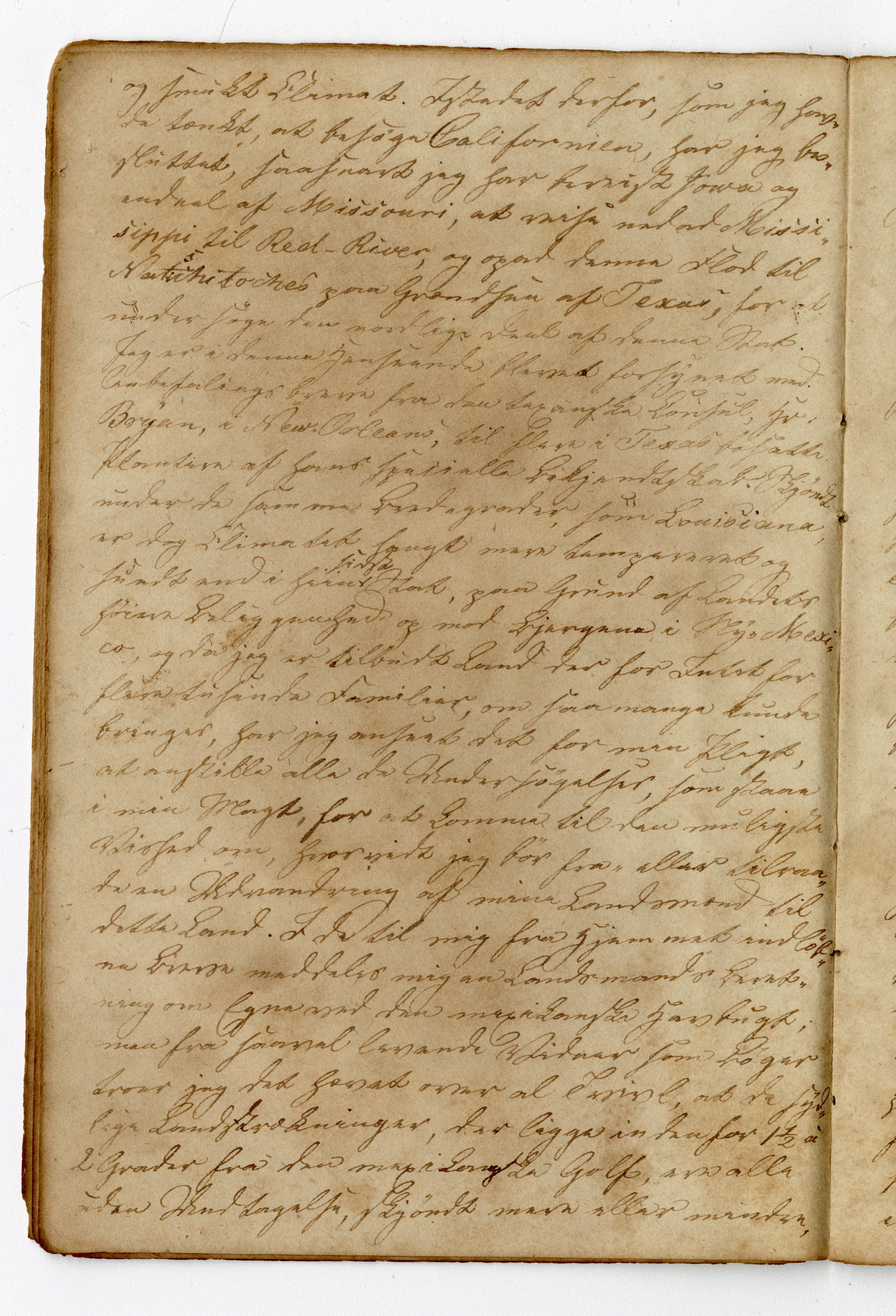
On his trip, Reiersen explored the United States and reported on settlement possibilities. He traveled to Indiana, Illinois, Wisconsin, Iowa, Missouri, down to St. Louis and on to New Orleans. He eventually made his way to the Republic of Texas, where he met Sam Houston (President of Texas) and Cleng Peerson. Houston expressed that he would like to have a colony of Norwegian emigrants in his republic, which was encouraging to Reiersen.
Reiersen wrote a book about America called Veiviser for norske emigranter til de forenede nordamerikanske stater og Texas (Pathfinder for Norwegian Emigrants to the United North American States and Texas) in 1844. He laid out thorough descriptions of several regions, devoting a special chapter to the Republic of Texas. This guide was considered extremely valuable to future emigrants. Not only was it very descriptive of the landscape and farming conditions, but also contained opinions regarding which lands would be most fruitful.
Before his emigration in 1846, Reierson started a monthly magazine called Norge og Amerika to report on Norwegians in America. When he decided to emigrate – to none other than Texas – Elise Wærenskjold assumed the role of editor until she immigrated to Texas. Wærenskjold was a well-known letter writer who often published articles in newspapers in Norway. Many of her writings were later published as The Lady with the Pen: Elise Waerenskjold in Texas.State of Minnesota Encourages Settlement
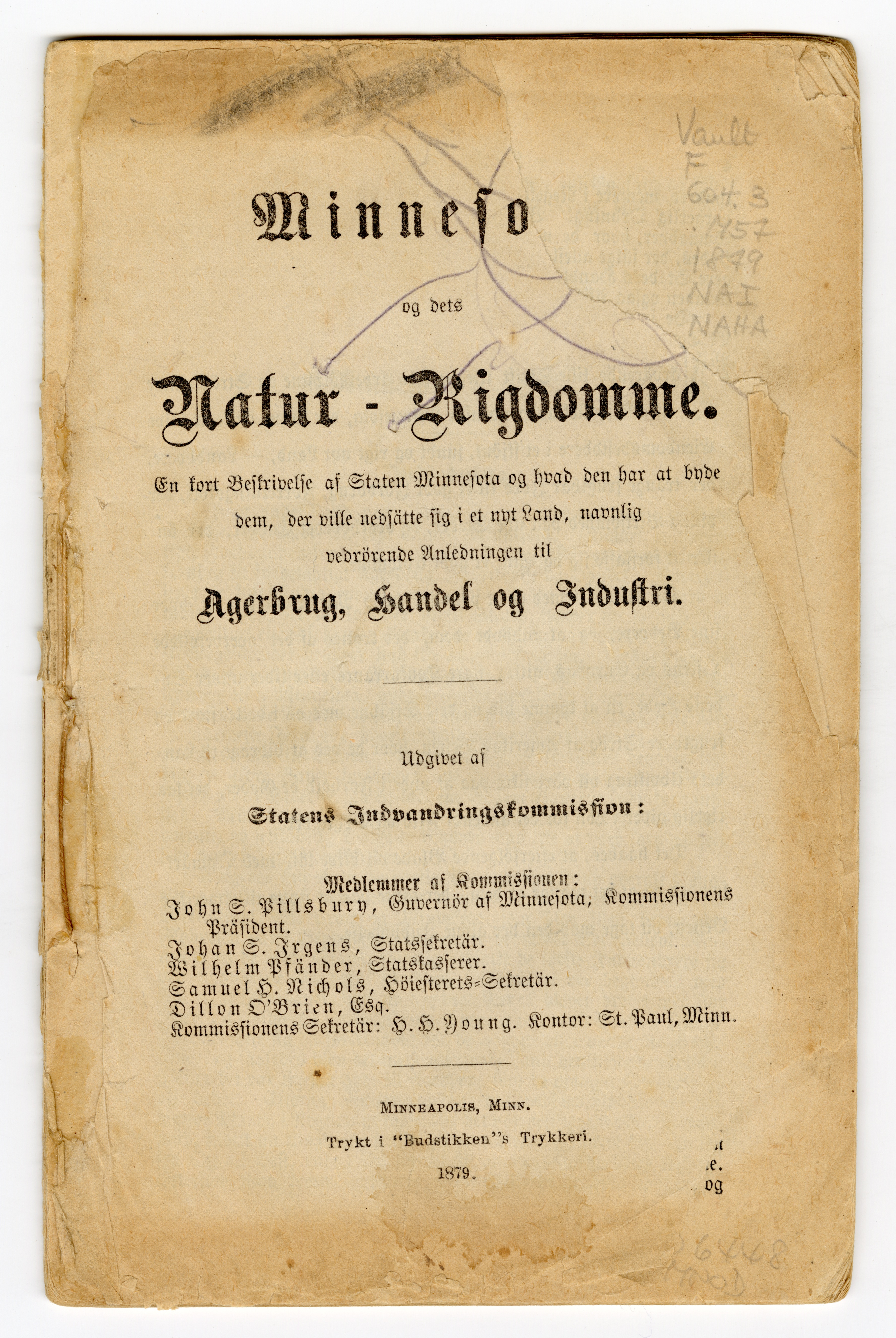
In Minnesota, much later than Reiersen and Wærenskjold in Texas, the State of Minnesota invested in encouraging Scandinavians to settle in the state. Paul Hjelm-Hansen, the former editor of Folkets Røst (The Peoples Voice) and Drammens Tidende, traveled to the United States in 1867. His goal was to write about the conditions of emigrants in the Midwest in Norwegian newspapers including Morgenbladet. However, he never returned to Norway. He established himself as a newspaperman, editing Faedrelandet og Emigranten (1867-1869). In 1869, he was appointed a special agent of Minnesota to encourage Scandinavians to settle and published a travel account of the Red River Valley.