Ole Nesthuus letter, Muskego, Wisconsin, 1842
1 media/p0560_Ole_thumb.jpg 2024-10-03T16:31:42+00:00 Kristina Warner c8c3eeb8fc534b4204fc4ece92574ef9ee4ab6bd 6 1 Lars Nesseim Papers (P0560) plain 2024-10-03T16:31:42+00:00 44.461052777778,-93.182136111111 20241003 111554-0500 Kristina Warner c8c3eeb8fc534b4204fc4ece92574ef9ee4ab6bdThis page is referenced by:
-
1
media/nmmn_00001.jpg
2024-03-26T16:12:12+00:00
America Letters
26
plain
2024-10-18T21:28:24+00:00
Carleton Qualey notes that “America letters were a dynamic factor, perhaps the most effective single factor” for encouraging emigration. However, not all of these letters portrayed America in a positive light. The sudden loss of population in Norway prompted discussions to speak out against immigration. Bishop Jacob Neumann, bishop of the Diocese of Bergen, published a pamphlet to describe the hardships of the voyages and the grimness of the American frontier. Neumann’s “Word of Admonition to the Peasants” appeared as early as 1837 – a year before Ole Rynning’s famous “True Account of America." This pamphlet was well distributed in areas that experienced “America fever” the strongest.
“America letters” written from Norwegian emigrants to their families in Norway often talked about the travel by sea and land, the land itself upon arrival, their work, and other accounts of their daily life and home. These letters often explore the dynamics of the emigrant experiencing change in the culture they knew to the culture they were now growing part of and showcase the idealistic hopes and realistic disappointments.Examples of Writings Against Emigration
One of the earliest, and well-known, examples of writings against immigration was a letter dated April 22, 1839, from Sjur Jørgensen Haaeim from Illinois. This letter, which appeared in Bergens Stiftstidende and Tiden, gives a mournful account of the difficulties he and other Norwegians had, and the desire to return home.
In this letter home, Haaeim is writing to Bishop Jacob Neumann. Haaeim says Norwegians left due to hatred of the clergy and others in authority, bitterness toward their neighbors, and crimes committed in Norway. He goes on to say,"When all these people get together in one community you can easily imagine what goes on in these American forests. There isn’t a church within a hundred miles and we are thrown into the midst of the worst heathdom in the world. A few individuals had decided to return to Norway, but they died last fall; if they had succeeded in getting home I don’t think quite so many Norwegians would have emigrated thereafter. I have so much to tell the Norwegian people that I haven’t room for it all. I therefore ask that you tell all my brethren in Christ not even to think of coming here; I assume them that they will regret it, unless they are completely reckless in every respect. I am not suffering from poverty, and many with me, mostly on account of sickness."
By 1841, Sjur Haaeim returned to Norway and wrote a ten-page pamphlet speaking out against Norwegian migration to America. This pamphlet was called “Information on Conditions in North America.”Examples of Writings For Emigration
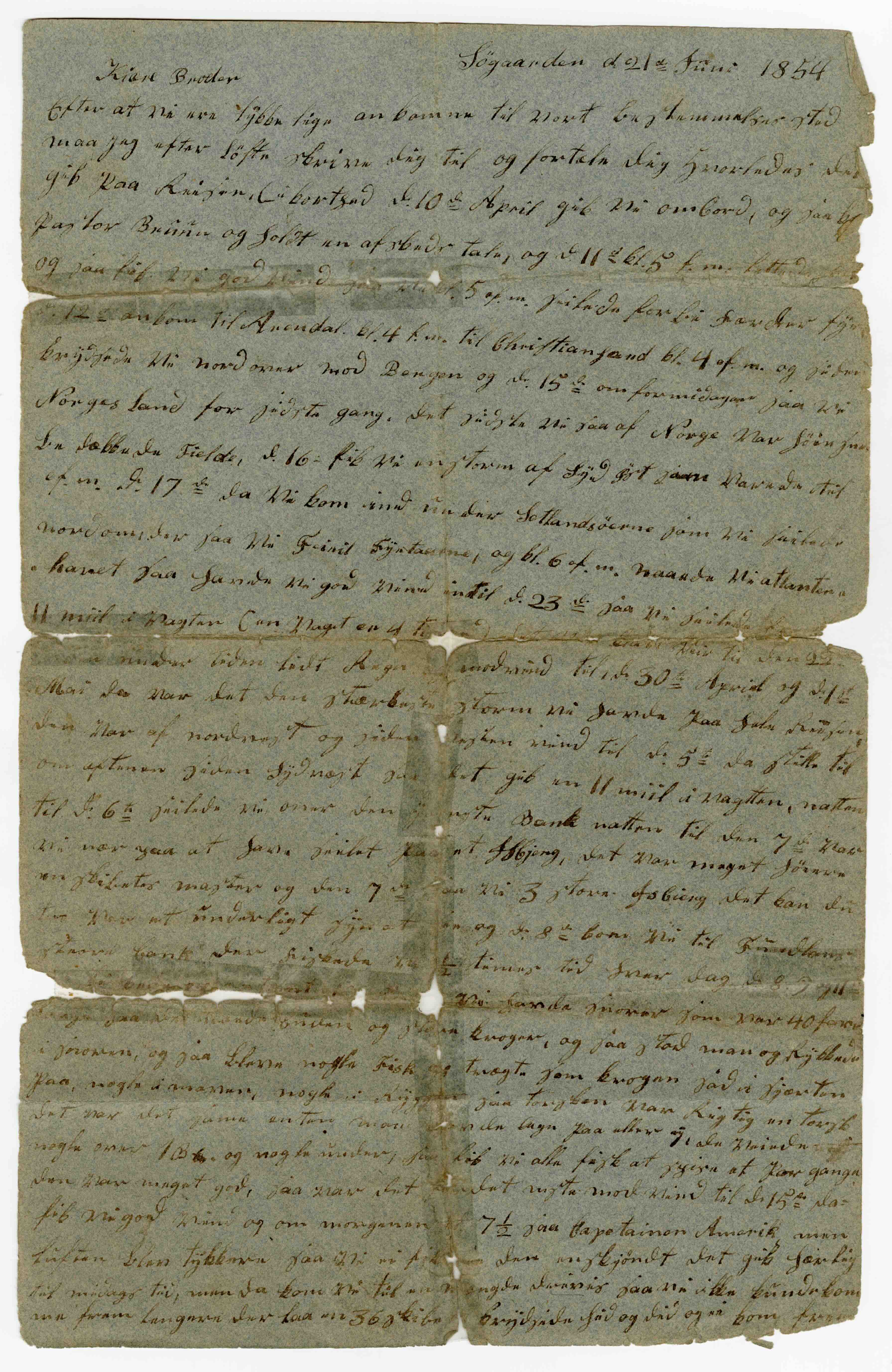
A letter from Ole Olson Østerud to his brother in Norway shortly after his arrival at the Muskego settlement outlines his journey from Oslo (Christiania) through Quebec Harbor, Detroit, Chicago, and Milwaukee – all with comments on America. This letter reveals the interests and attitudes of immigrants. Østerud eventually left Muskego to settle in Fillmore County, Minnesota in 1856.
"Racine County, Wisconsin
June 21, 1854…Tosten’s circumstances are exactly as he has written. He has a large farm and much stock….As far as food is concerned here in America, there is an abundance. Even though I tell you so, you will perhaps all think it a falsehood. Concerning wages, conditions are as you have heard before. Today I was offered twelve dollars a month and keep, but I did not accept, for I expect to get more."
Examples of Writings Indifferent for Emigration
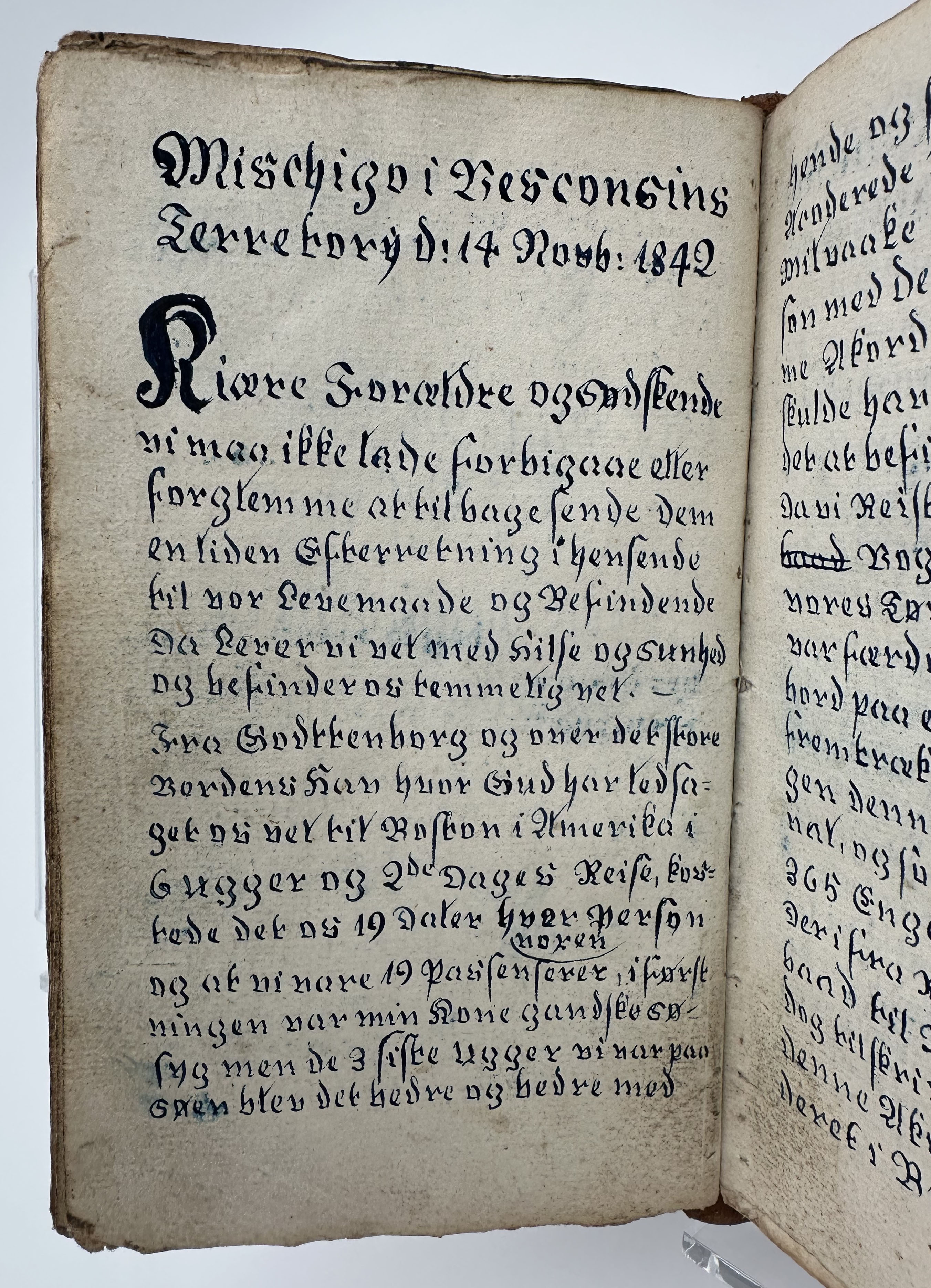
Ole Nielsen Nesthuus wrote to Niels Andersen Brekke from Muskego, Wisconsin, in 1842 speaking positively of his experiences so far in America, providing insights to potential immigrants on what and what not to bring with them to America. He covers the costs of bringing materials over with them that in the end, were of no use.
"All who left Voss this year are happy and in good health. As I said before I shall neither advise nor discourage anyone, for each one will have to decide for himself if he wants to leave Norway and come here. Perhaps you will say among yourselves – Why will he neither advise nor discourage us about coming to America, for now he knows what would be best for us? Can I in any way imagine what will meet you in this country, or can anyone for certain say that his fate in Norway will always be good?”
This letter was transcribed from the original by Lars Nielssen Nesseim in Voss, Norway. Little is known about Nesseim, but there are multiple volumes of copied immigrant letters that he transcribed diligently in ornate and homemade ink in leather-bound books he created. These books were used to circulate in the community and show another way the letters reached various communities outside of newspapers.