Norwegian Immigration to MinnesotaMain MenuIntroductionOverview of MigrationNorwegian Settlement in MinnesotaNorwegian Lutheran Church in AmericaNorwegian-American EducationHospitals and Benevolent SocietiesNorwegian-Americans in PoliticsAnti-foreign Animus and AmericanizationCitizenship and Return to NorwayLegacy in MinnesotaKristina Warnerc8c3eeb8fc534b4204fc4ece92574ef9ee4ab6bd
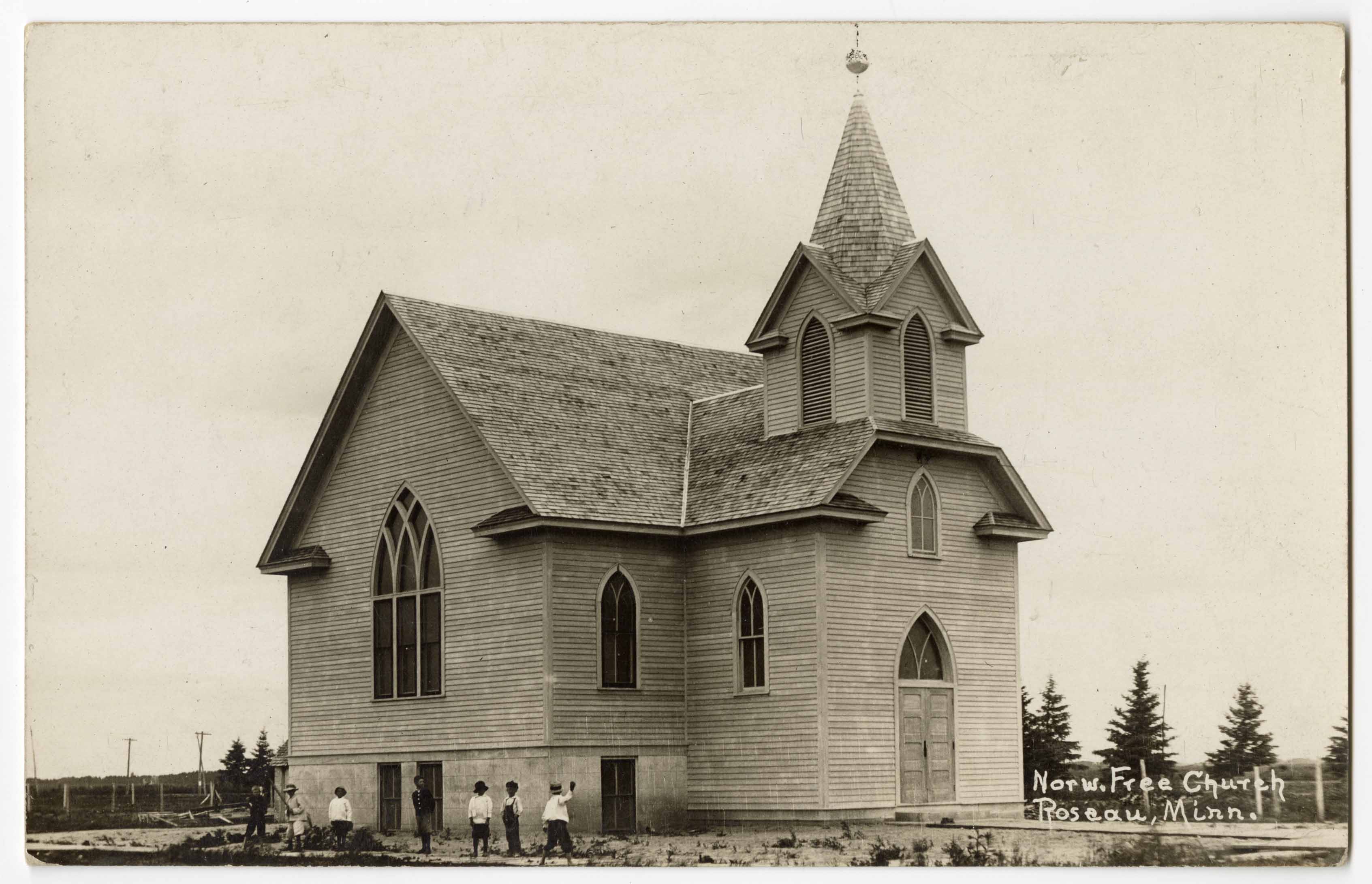
Moe Norsk Lutheran Church, Roseau, Roseau County, Minnesota
1media/nmmn_00165_thumb.jpg2024-10-03T16:45:10+00:00Kristina Warnerc8c3eeb8fc534b4204fc4ece92574ef9ee4ab6bd61Congregation Records (P0537)plain2024-10-03T16:45:10+00:00Kristina Warnerc8c3eeb8fc534b4204fc4ece92574ef9ee4ab6bd
This page is referenced by:
1media/nmmn_00166.jpg2024-06-03T17:33:12+00:00Lutheran Free Church (LFC), 1897-19633plain2024-10-03T20:09:12+00:00Disputes formed in 1893 throughout the UNLC about which school should be the college of the church body – Augsburg or St. Olaf. This led to the creation of the Friends of Augsburg. Georg Sverdrup, Sven Oftedal, and others felt that their beliefs of a “free church in a free land” were being compromised. In 1897 they broke away from the UNLC. The Lutheran Free Church had a publishing house (later Augsburg Publishing House) that published a Norwegian language newspaper called Folkebladet, or the People’s Paper.
The Lutheran Free Church emphasized utilizing and developing the gifts of all members of the church. Due to their beliefs, women were able to hold offices and have more responsibilities than other Lutheran groups. The LFC also emphasized foreign missions – an effort on which they spent more money than others. Many of these missions were in Madagascar and China. Lutheran Free Churches believe that the New Testament contains fundamental principles that should be important in the congregations – known as “Guiding Principles.” One of the guiding principles emphasizes the local congregation.
By 1963, the LFC joined the American Lutheran Church. In 1988, the American Lutheran Church joined the Evangelical Lutheran Church in America (ELCA), however some did not join. They instead formed the Association of Free Lutheran Congregations.