Norwegian Immigration to MinnesotaMain MenuIntroductionOverview of MigrationNorwegian Settlement in MinnesotaNorwegian Lutheran Church in AmericaNorwegian-American EducationHospitals and Benevolent SocietiesNorwegian-Americans in PoliticsAnti-foreign Animus and AmericanizationCitizenship and Return to NorwayLegacy in MinnesotaKristina Warnerc8c3eeb8fc534b4204fc4ece92574ef9ee4ab6bd
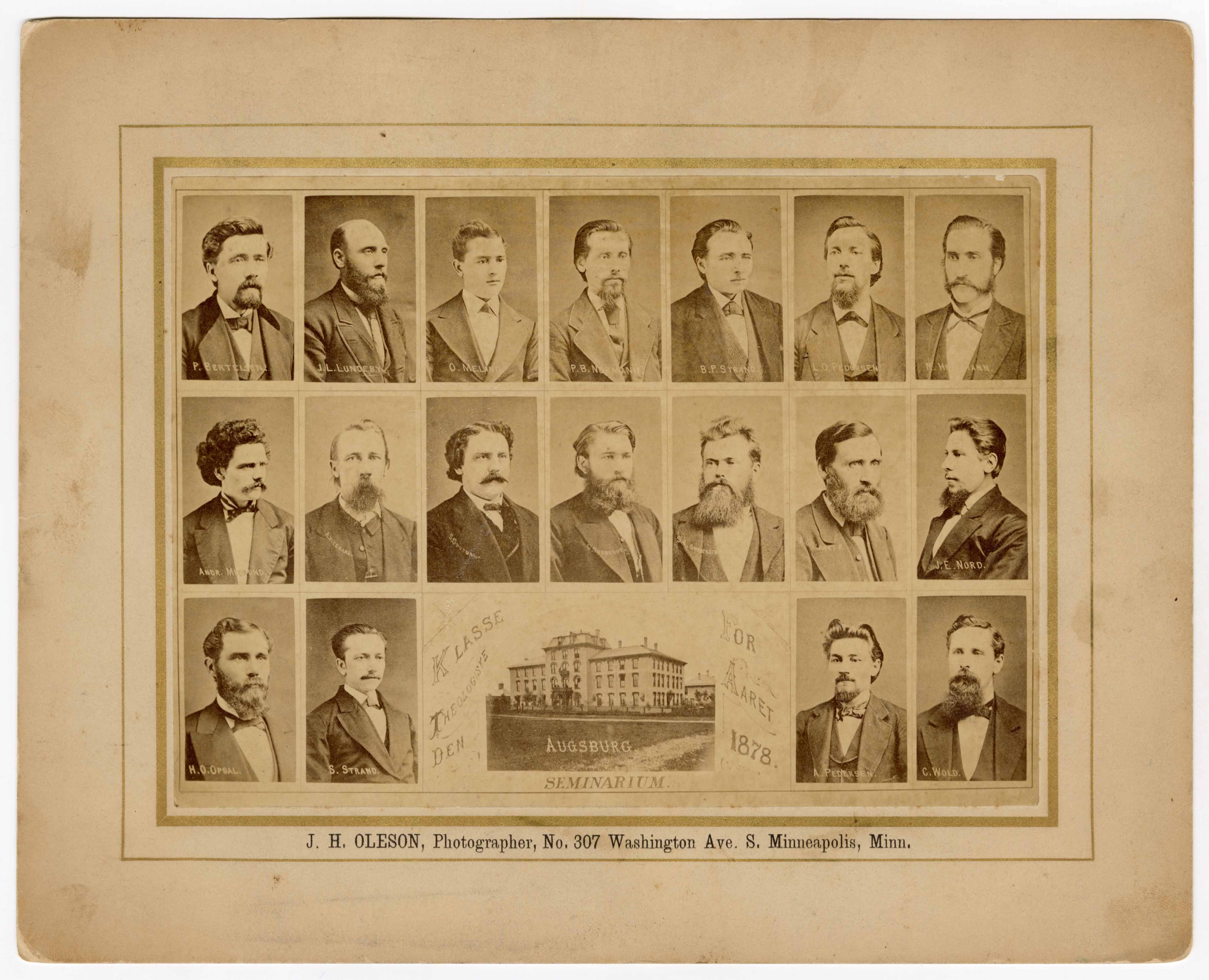
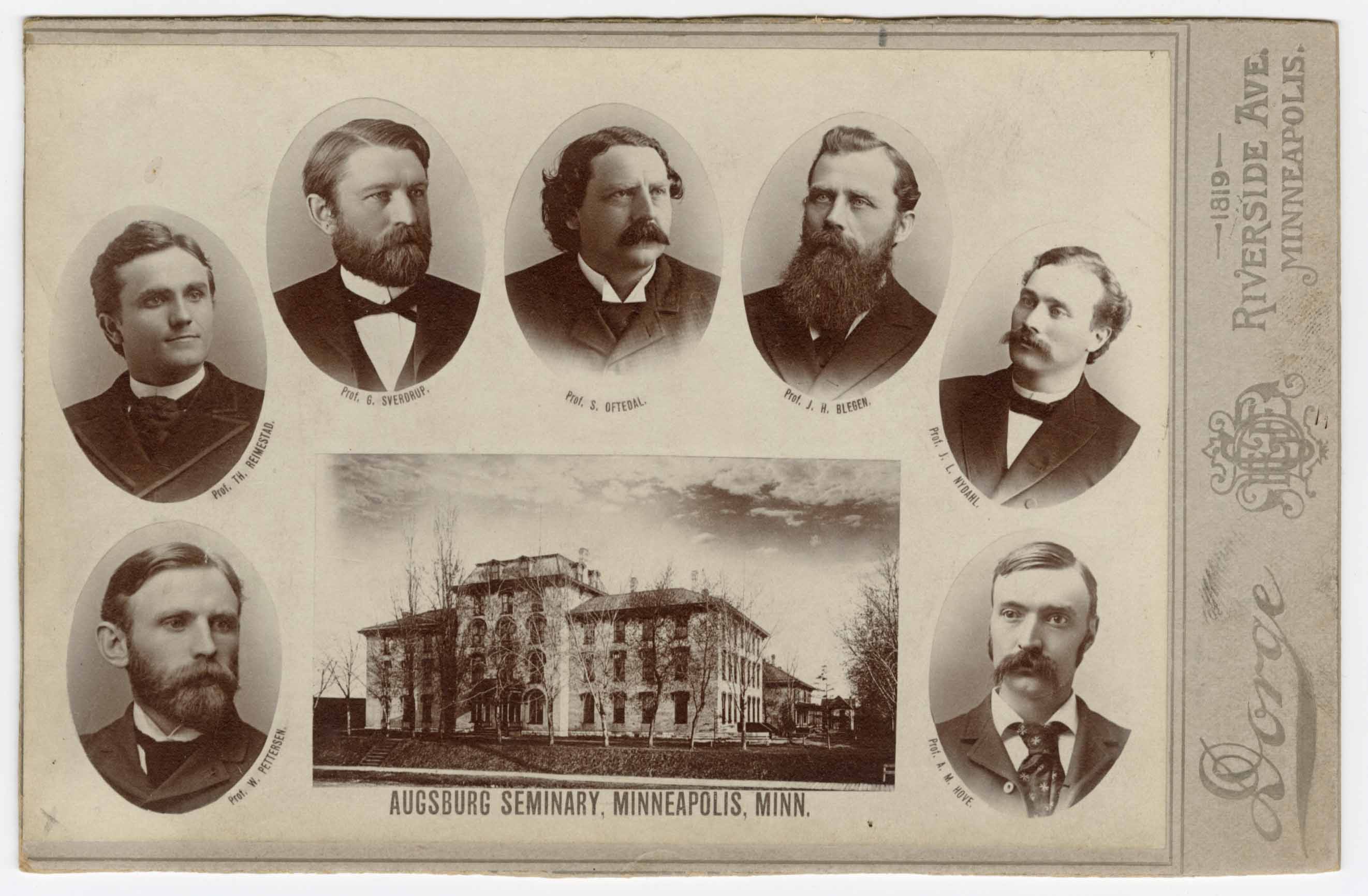
Augsburg Seminary was established in Marshall, Wisconsin in September 1869 as the Augsburg Seminarium. Three short years later, the seminary moved to Minneapolis and changed its name to the Norwegian Danish Evangelical Lutheran Augsburg Seminary to reflect the church body that was sponsoring the school. By 1892, the name was shortened to Augsburg Seminary. When conflicts arose in the Norwegian Danish Evangelical Lutheran Church, the leaders organized the “Friends of Augsburg” which led to the formation of the Lutheran Free Church.
From the 1910s, they used the name Augsburg College and Theological Seminary. The name was formalized in 1942. However, when the Lutheran Free Church merged with the American Lutheran Church, Augsburg Seminary merged with the Luther Theological Seminary. Later this was renamed to be Luther Seminary. The remaining undergraduate college was still in existence and became known as Augsburg College. In 2017, it was officially recognized as Augsburg University.
Presidents of Augsburg Seminary
August Weenaas served as the first president from 1869 to 1876 until he returned home to Norway. He eventually came back to the United States to teach technology at Red Wing Seminary (1882-1885) before returning to Norway again. Weenaas helped recruit Sven Oftedal and George Sverdrup – two teachers from Norway. Both Oftedal and Sverdrup were from prominent Haugean families. Eventually, both served as presidents of Augsburg.
Sven Oftedal was influential in starting the Folkebladet Publishing Company in 1877. This publishing company printed Folkebladet, a Norwegian American newspaper that identified itself as the “organ of Lutheran Free Church.” The newspaper focused on church activities in Minnesota, Iowa, North Dakota, South Dakota, and Wisconsin. The entire newspaper from 1877 to 1952 has been digitized by the Augsburg University Archives. Eventually, the Folkebladet Publishing Company merged with Augsburg Publishing in 1962, which became Augsburg Fortress Press, and today is known as 1517 Media.
George Sverdrup, along with Oftedal, were educated in Norway and part of the Norwegian Parliament called the Storting. Together, Sverdrup and Oftedahl helped found the Lutheran Free Church in 1897. Outside of Sverdrup's teaching at Augsburg, Sverdrup was an editor of Theologisk Kvartalskrift, Lutheraneren (later named Luthersk Kirkeblad), and the magazine Gasseren. After his death, many of his writings were published by Andreas Helland in Georg Sverdrup: The Man and his Message, 1848-1907.
Augsburg University Today
Today, Augsburg University is a private liberal arts university in Minneapolis, Minnesota with an affiliation to the Evangelical Lutheran Church in America. Augsburg University’s mission is to be “informed citizens, thoughtful stewards, critical thinkers, and responsible leaders” with an” engaged community that is committed to intentional diversity in its life and work.”