John A. Johnson: An Uncommon AmericanMain MenuIntroductionEarly DaysSettlement in WisconsinEntrance Into PoliticsCivil WarBusiness EndeavorsFuller and Johnson CompanyGisholt Machine CompanyThe Public SchoolKristina Warnerc8c3eeb8fc534b4204fc4ece92574ef9ee4ab6bd
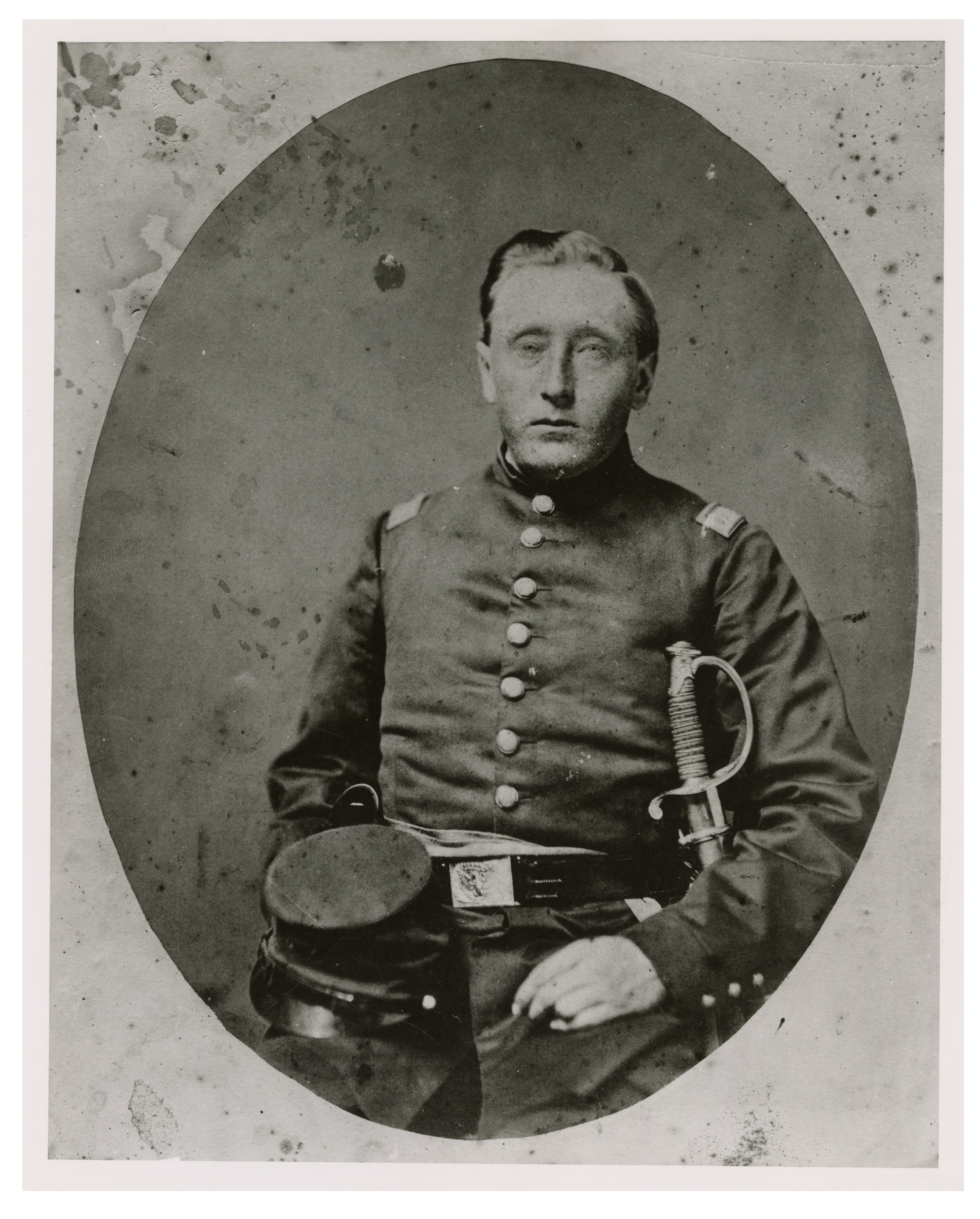
1media/OddLovoll_03.jpg2024-03-18T17:24:17+00:00Civil War15plain2024-10-18T21:17:02+00:00The American Civil War broke out in April 1861. Johnson, who opposed slavery, made a call for volunteers for a Scandinavian regiment to fight. This would eventually turn into the Fifteenth Wisconsin that would be led by Hans C. Heg. Governor Randall called on Ole C. Johnson, John’s brother, to serve as recruiting officer for the Fifteenth Wisconsin. Ole was intelligent – he had excellent English and Norwegian language skills that would aid in recruitment. Eventually, Ole was removed from recruiting efforts and was made captain of Company B of the Fifteenth Wisconsin, made up largely of volunteers from the Koshkonong area. Romantically they called this “Wergeland’s Guard” for the Norwegian poet, Henrik Wergeland.
The Battle of Chickamauga
Ole had a very long and dramatic career in the war. He first served as company captain where he took part in the battles of Perryville and Stones River in Tennessee. He was promoted to the rank of lieutenant colonel under Hans C. Heg, and eventually commanded the Fifteenth Wisconsin in the Battle of Chickamauga after the death of Heg. The battle of Chickamauga was tragic for the regiment. At the start, they had 176 men and by the end of the battle, 111 were either killed, wounded, or missing (65% of its effective losses). On the second day, Ole was reported missing – he was captured and forced to deliver his sword to a staff officer in the Confederate Army. Ole was transferred to Libby Prison in Richmond, Virginia, where he often wrote to his brother John.
The conditions at Libby Prison were rough. The men slept on the bare floor in their dirty and ragged clothes. Exercise outside was prohibited – this meant almost no chance to breathe fresh air. Their diets consisted of cornbread and pea soup. Ole noted that malnutrition was prominent and contributed to serious sickness and death. To keep occupied, they received letters and books from family – even though the prison rules were stringent on writing letters. Each man was allowed to send out one six-line letter a week. This rule was created to reduce the work of the censor. Ole tried to circumvent this rule by dissolving soda in water or using onion juice to produce invisible writing between the lines or on the back of an innocent letter. These writings could only be discovered when holding over a heat source. Ole was able to find a way of notifying his family to “get wise to the invisible writing on the back of my letters.”
On May 7, 1864, Ole and other commissioned officers who served in the Union Army started their march from Libby Prison to Andersonville, Georgia. Ole and two others had other plans – they weren’t going to Andersonville. When they were transferred to a train car in Charlotte, North Carolina, the train car they were in had a hole in the bottom. Quickly, they covered the hole and waited for the train to stop. When they reached Chester, South Carolina, they crawled out of the hole, escaping untouched. They planned to reach the Union lines near Knoxville, Tennessee, over 200 miles away. On June 10, 1864, they came to the headquarters of the Union Army in eastern Tennessee at Strawberry Plains. Emigranten soon reported on July 16, 1864, that Ole C. Johnson had escaped.
Ole Johnson wasn’t the only brother of John’s to join the Civil War. His brother Hans, who was a farmer in Goodhue County, Minnesota, volunteered in the Third Minnesota Regiment. Hans served less than a year before he died in a military hospital on July 5, 1862, at the age of 26. He was buried in Murfreesboro, Tennessee. John’s life was impacted by the war, even if he didn’t fight himself. His brothers served and one lost his life. He felt called to compile a record of the Fifteenth Wisconsin Regiment, which resulted in his 1869 publication “Det Skandinaviske Regiments historie (15de Wisconsin Regiment): En kortfattet historie om dets organization og de feldt-toge, hvori det tog del.”