John A. Johnson: An Uncommon AmericanMain MenuIntroductionEarly DaysSettlement in WisconsinEntrance Into PoliticsCivil WarBusiness EndeavorsFuller and Johnson CompanyGisholt Machine CompanyThe Public SchoolKristina Warnerc8c3eeb8fc534b4204fc4ece92574ef9ee4ab6bd
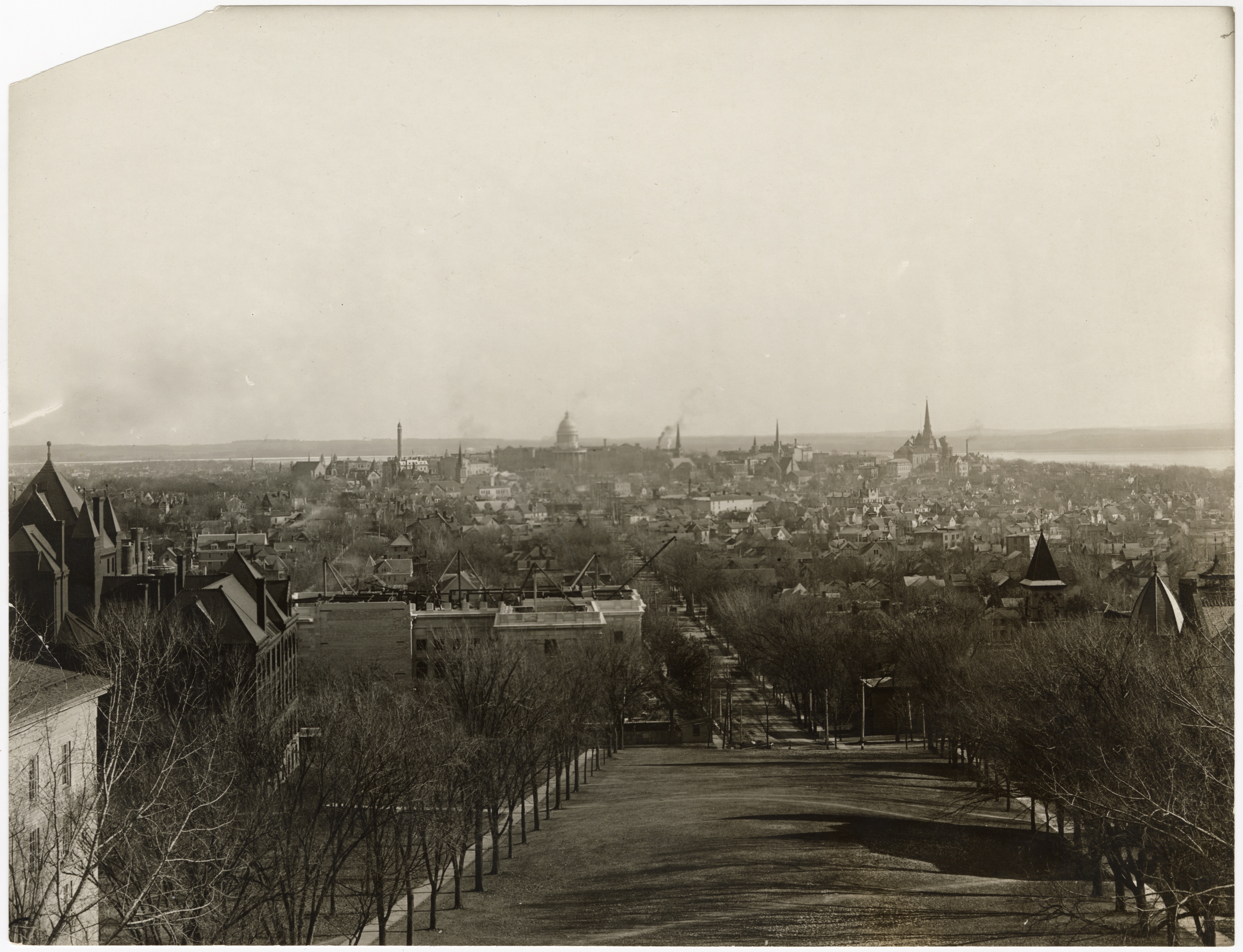
Looking down Bascom Hill to the Wisconsin State Capitol, Madison, Wisconsin, circa 1900
1media/p0691_00065_thumb.jpg2024-09-30T20:27:51+00:00Kristina Warnerc8c3eeb8fc534b4204fc4ece92574ef9ee4ab6bd51P0691: John A. Johnson Papersplain2024-09-30T20:27:51+00:0020231012140523-0500Kristina Warnerc8c3eeb8fc534b4204fc4ece92574ef9ee4ab6bd
This page is referenced by:
1media/p0691_00063.jpg2024-03-18T17:25:31+00:00The Public School18plain2024-10-18T21:26:14+00:00Johnson placed value on formal education, and especially the public school system. Having missed the opportunity for a formal education in his youth, he was sympathetic to young people who lacked the funds to receive higher education. Johnson and his wife let several young men stay at their house while they were attending the University of Wisconsin. In addition, he knew that funding was an important obstacle to attending college. In a letter to the board of regents of the University of Wisconsin dated February 12, 1876, he donated $5,000 as a perpetual fund. The income was to be allocated to students in need of financial help. University President John Bascom in his next annual report acknowledge the gift, he said: “The present year has been marked by the bestowment of the first scholarships. Hon. John A. Johnson, of Madison, has established ten annual scholarships of $50, each, under conditions elsewhere given.”
Johnson felt indebted to the common school. He thought it was the basis of a democratic attitude in society. In his scholarship, he specified that to qualify for a scholarship, a student must have attended the common school for at least one year before reaching the age of 15, they must have a talent and evidence for learning and the ability to apply themselves, and record of good conduct and establish a real need for financial help. He believed that by merging his old-world heritage with the values best in American life, Scandinavians could become more useful citizens of their adopted country.
Advocating for Scandinavian Culture
To encourage children of immigrants to attend the University of Wisconsin, he made a special suggestion regarding this gift: An otherwise qualified applicant for help who could read or speak reasonably well in either Norwegian, Danish, Swedish, or Icelandic should be given preference in the selection of Johnson scholarships until the year 1900. He also included something that was unusual at the time “No distinction as to sex shall be made by the committee in giving aid” and Johnson always believed in equality of opportunity for the sexes. He noted, “Your daughters deserve as thorough an education as your sons.”
In spite of his support of the common school and the use of English, Johnson never lost his love for Norwegian. He began to advocate for Scandinavian languages to be taught in high schools and colleges on the same basis as German. He felt particularly strongly that the University of Wisconsin should include Northern languages in its course of study. Johnson wrote a letter to then University President P.A. Chadbourne suggesting the advantages, such as noting a state in which so many citizens were of Scandinavian descent. He hinted at his friend, Rasmus B. Anderson of Albion Academy, as a person to fill the post. Chadbourne responded favorably to his letter.
Views against the Norwegian Synod
Johnson’s views were against the clergy of the Norwegian synod, including then president of the synod Rev. H.A. Preus. Nonetheless, Rasmus Anderson began teaching at the University of Wisconsin in the fall of 1869. Johnson and his wife Kaia allowed Rasmus to stay with them while he saved money to bring his family to Madison. In the 1869-70 academic year, Rasmus made history by being the first instructor to teach Norwegian in an institution of higher learning in the United States However, a year later Chadbourne had retired, and the administration made it difficult for the new professor who had few friends. Johnson helped Anderson buy library books in the Scandinavian languages as the school provided almost no funds to build up his department.
To get more support for the Scandinavian Department, Anderson approached Ole Bull who was living in Madison at the time. Bull put on a concert on May 17, 1872 – Norwegian Independence Day. This concert raised $534.60. The books this money bought created the Norwegian section at the University of Wisconsin Library. By 1875, Anderson was appointed professor of Scandinavian languages. Anderson resigned from the university in 1883 to enter the life insurance business, and later by Johnson's suggestion to Senator William Vilas, Anderson was appointed United States Minister to Denmark.